Kickz4All_
As a refurbished sneaker store, Kickz4all needed a quick, and high converting webshop. Using Nuxt and Shopify, I built them a headless webshop focused on exactly this.
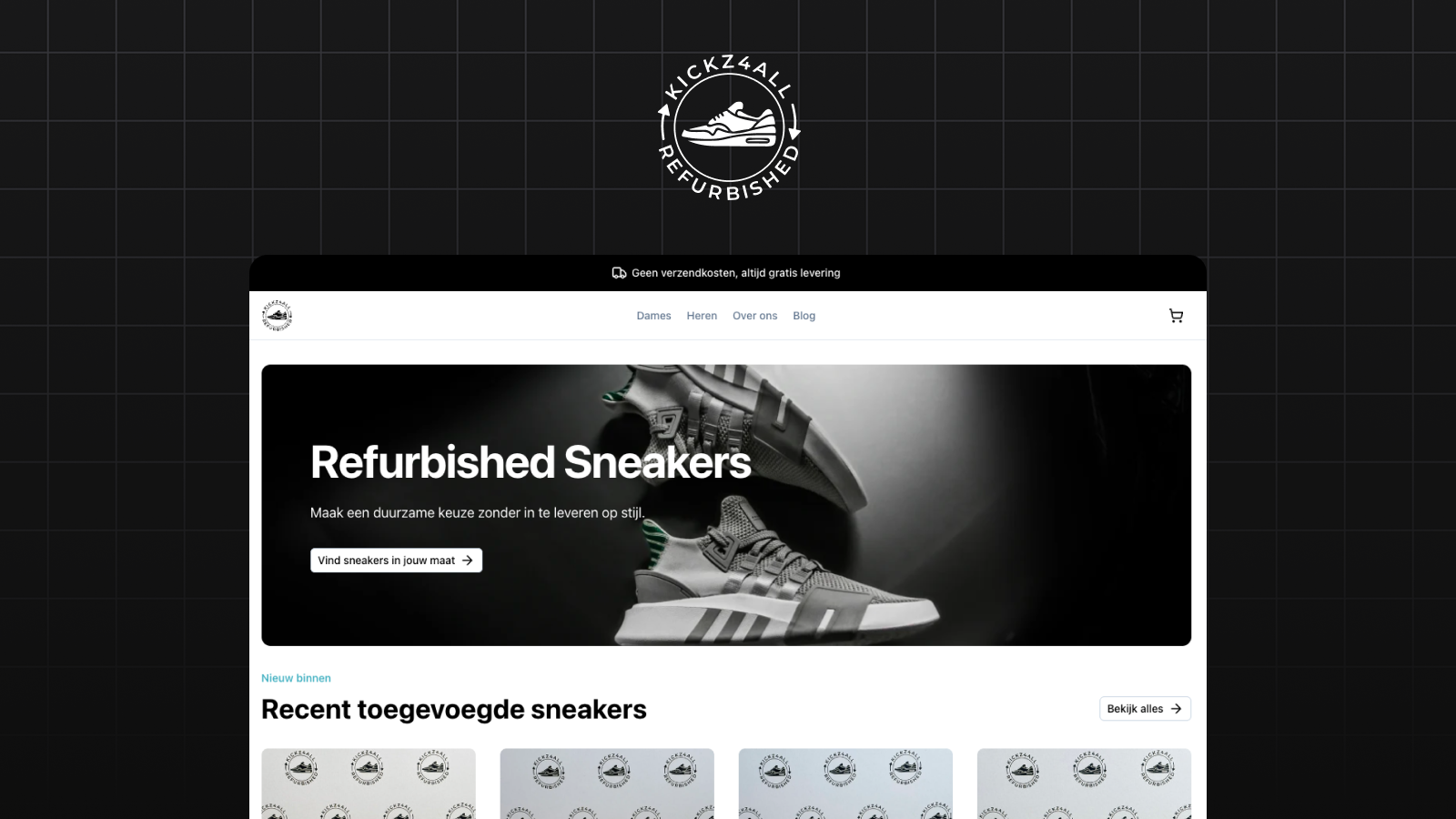
Start of the project
While I started this project at the end of 2025, it had already begun in 2023. Back then, for this same client, I already created a custom webshop using Shopify's own templating language (Liquid).
When I discussed with him that he was relaunching the website, I proposed building him a new one using Nuxt. This would not only give the client a faster website but also allow me to experiment with creating a headless Shopify story, which has interested me for a while.
Research phase
Since this was my first time creating a headless Shopify store, I started by doing extensive research on how to approach the project. At first, I started thinking about how I wanted to build the website's frontend. I decided on Nuxt UI for this, since it would let me easily replicate the previous design but with a slightly more modern twist.
The more complicated part was handling the backend. While Shopify does offer Hydrogen, an alternative to Liquid that allows you to build a headless webshop, it is a React-based framework, so it wouldn't work with Nuxt (my go-to framework).
Then after looking for Nuxt specific solutions, I came across two options:
- Nitrogen - A Nuxt template inspired by Hydrogen.
- Nuxt Shopify module - A module that allows you to easily connect with the Shopify API.
When looking at these projects, I thought both of them were still quite incomplete, so in the end I decided to go for a custom GraphQL connection with the Shopify API.
Looking back at it, I probably would have gone with the Shopify module instead, since it has been quite active.
Development
After the research for this project was done, the actual development work was quite straightforward. I started by making all the necessary components, using Nuxt UI as the base and customizing where needed.
Since the website was quite simple for now, we decided to make some content static (home page, about us) and rely on Shopify for the rest (products, articles, policies). I also added i18n support right away, even though the website will start off with only Dutch texts, this will allow the site to easily expand to other countries when they want to.
One of the main goals of the website is to get organic traffic through Google. To ensure the website is optimized for search engines, I installed Nuxt SEO and configured basic settings, including the sitemap, canonical URLs, meta tags, and more. After that, where needed, I added structured data and created a dynamic XML file to ensure all products are correctly synced with Google Merchant Center.
Conclusion
While this website has not been online for very long yet, I am quite happy with the result so far. The website is much faster than before, much more optimised, and more ready to grow.
The next steps for this website will be to eventually migrate to the Nuxt Shopify Module, and, in the long term, we also plan to integrate it with a CMS to make it easier to edit content across all pages.